

Books Can Take Us Minds Away
How literature teaches of conscience and courage

I’ve spent a lot of the last few months thinking about temptation.
First, Screwtape on Stage came to Phoenix, and at the last minute my husband and I were given tickets to take a group of high school students to the play. I did a quick re-read of the book beforehand and appreciated the play even more having done so. This was my third time seeing the show, and Lewis’s words become only richer for having heard them more often. The Fellowship for Performing Arts does excellent work. I highly recommend catching the show if it’s coming near you. (No kickbacks to me. I really respect FPA and its work.)
Then, I read two recent imitations of Screwtape focused on women and reviewed both for Religion Unplugged.
But the point I want to draw here regards children’s literature. One of the greatest gifts that fiction offers is the capacity to enter into another person’s perspective, which is another of way of saying, into another’s temptation.
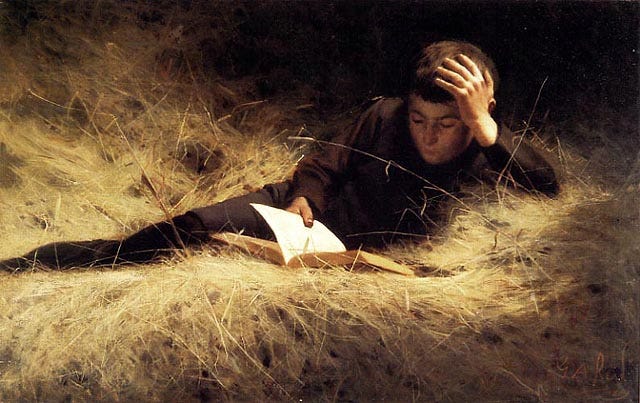
Not just “to take us lands away,” as Emily Dickinson famously put it. But to take us minds away. To see inside another’s head, to watch the decision-making of another person in a set of circumstances unlike yet like our own. To see our hero or heroine enter into temptation, and to see the consequences of his or her decision.
This is, of course, part of what makes great literature great, and worthy for its own sake. But it also offers enormous practical value.
Experience shapes our inclinations and affections, to say nothing of our sense of morality and duty. But we can experience something only by—well, by experiencing it, and I’d really rather not experience every form of temptation. Jesus did that, as our Great High Priest who was tempted in every way, but I’m not Jesus, nor are my kids.
We cannot have every experience, but we do have stories. Stories offer a kind of artificial experience. Of places, yes. Of other eras, too. And also of other temptations.
When we read a story, whether it’s from the Bible or from Dr. Seuss, we’re facing someone else’s challenges. We’re looking straight at another’s temptation. We’re also seeing—unblinded as we would be for ourselves—the darkness of bad choices, the way sin shrinks the soul of the sinner, the consequences that extend much further than the doer imagined.
As Charlotte Mason put it in Ourselves, we can learn either “through what is called fiction, or from the bitter experience of life, from the penalties of which our writers of fiction do their best to spare us.” I’ll take learning through fiction, please.
Here are a few of the lessons that great children’s fiction can teach.
Temptation can be small
Literature can show something that is otherwise hard to see: temptation is often small. Only infrequently do we encounter it as the looming, enormous threat we imagine ourselves facing in a heroic showdown. There will be a small choice, something that seems inconsequential and hardly even wrong, that will turn out to be monumental. It’s just not possible to tell until afterwards. We don’t have the foresight to predict accurately which decisions will be important and which ones are not.
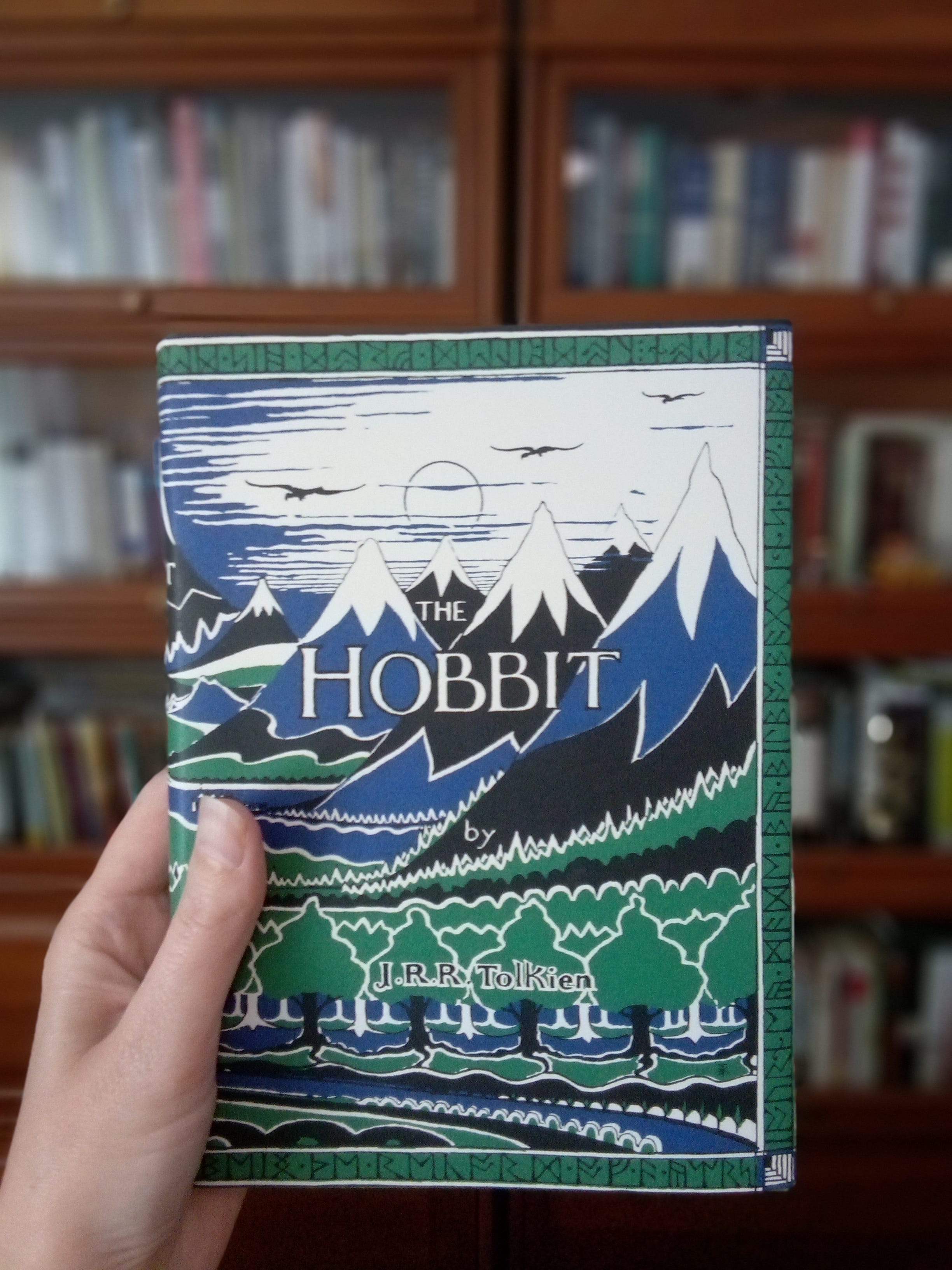
See Bilbo Baggins in The Hobbit, crouching in a tunnel before a dragon’s lair. He has traveled long, hired on speculation to rob back a dragon’s stolen treasure, and throughout the journey he—little Bilbo the Hobbit, untested, unaccustomed to adventure—has proven the hero over and over.
But now at the long-sought dragon’s lair, he hesitates. The tunnel is hot from the dragon’s breath. There is a sound of boiling. A red light emanates from further ahead. He stops.
Surely no one would fault him for cowardice in turning back. His companions, the dwarves, are too clumsy for burglary and will not try the tunnel. He might easily enough make excuse and run. Why not call it quits?
J.R.R. Tolkien—a World War I veteran who knew danger, both the visible and invisible kind—sums up Bilbo’s deliberation: “He fought the real battle in the tunnel alone, before he ever saw the vast danger that lay in wait.” Tolkien lets us in on some hindsight, the narrator’s privilege, unknown to Bilbo, of course: “Going on from there was the bravest thing he ever did. The tremendous things that happened afterwards were as nothing compared to it.”
It’s a small moment in the story, a mere paragraph, probably just a few seconds of plot time, and yet everything hinges on this. Bilbo fought the real battle inside himself, and therefore went on to fight the visible, tangible battle that followed.
And this—a split-second decision made in darkness and solitude—is the moment on which all the later glorious moments depend.
Ambush
Have you ever won some big battle and thought, “I ought to reward myself,” and then gone and done something foolish? There’s no ill in an honest, well-earned celebration, but vanity and foolishness are particularly apt to lure us in just after some brave feat.
Children’s fiction warns us that having faced one temptation, we sometimes justify our giving way to a second, easier temptation, as in the case of Lucy in The Voyage of the Dawn Treader.
Lucy is in the magician’s house searching for a spell to make invisible things visible. Doing so will pacify a band of small-minded one-footed creatures and enable her party’s escape. Others in her group have been peeved and angered by these Dufflepuds, but Lucy has been gracious and brave through much inconvenience and danger.
Searching through the book of spells, Lucy sees one that promises beauty beyond the lot of mortals. Wouldn’t it be nice to outshine her big sister? With much effort and Aslan’s help, she turns the page. She wins that battle.
But then she finds another spell. It will let her know what her friends think of her—not as desirable as beauty, but still interesting. So, “to make up for not having said” the first spell about being beautiful, Lucy decides “she really would say this one.” All in a hurry, she rushes on to say the words, knowing a moment’s rational thought would change her mind.
So come many temptations, parading as rewards for some other virtue. But sin never pays. Lucy overhears some unpleasant remarks about herself, damaging her friendships. Could she have remained friends with these girls? Aslan reminds her, “No one is ever told what would have happened.” The italics are in the original, driving home Lewis’s point. We only get one set of chances, one decision per moment in time.
What rules are for
Fiction teaches us that childhood rules are not the end-all-be-all, but stepping stones to what really matters: self-government. If we choose wisely, we might not need many rules—but we typically don’t, so we do.
On the Banks of Plum Creek offers us this picture. A young Laura Ingalls, having been warned not to visit a swimming hole alone, attempts to do just that. Naught but a threatening badger stops her plans. Talking through the situation later, Pa asks the right question: “Do you know what people have to do to anyone they can’t trust?”
There’s the point—trust. Temptation asks you to betray trust, to doubt the wisdom of the rightful authority who gave instruction. Laura quavers: “Wh-at?”
“They have to watch him,” said Pa. “So I guess you must be watched. Your Ma will have to do it because I must work at Nelson’s. So tomorrow you stay where Ma can watch you. You are not to go out of her sight all day.”
What follows is a dreadful day. Laura stays inside, mending and cleaning with Ma. She does not see the sunrise, nor the shadows, nor the creek or the fishes or the bugs. “She was sure that being good could never be as hard as being watched.”
Had Laura shown more wisdom, she would have needed fewer rules. When she behaves foolishly, Pa sets up the contrast not as obedience versus disobedience, but as trust versus distrust. A wise person can be trusted to govern herself. A foolish person needs rules. The consequences for foolish behavior fit—an untrustworthy person has to be watched.
Books matter
Stories are always shaping our moral view.
I have heard my children say, “I guess I’m being a little bit like Eustace right now,” or “That was like when Mary and Laura slid down Pa’s haystack.” Books give us a bench of similes to our own lives. Which character are we acting like at any given moment?
Books don’t save. Only God does that. But good stories are one of God’s many common graces that point toward truth, beauty, and goodness.
This article contains affiliate links. If you make a purchase through my link, I may earn a small commission, at no extra cost to you. These commissions help to support my family and my writing. I’m grateful for your support!
Do you have comments or suggestions? Fill out The Hundred Acre Bookshelf Feedback Form here.
Wonderful resource! Love it! Also I’m reminded how books give us great parent tips as well:
“Pa asks the right question: “Do you know what people have to do to anyone they can’t trust?” “
Love it! Putting that line in my parenting tool kit.
This is the joy of Curious George, If You Give a Mouse a Cookie, How Do Dinosaurs series, Granny Torelli Makes Soup, Mop Top, The Pigeon Doesn't Want to Take a Bath etc. Lots of watching people be naughty and figuring out if we behave like that. Kids find it so relatable but if the plot isn't FUN and organic it is a real bore.